TL;DR — the short version
- North Carolina personal-watercraft rules apply on both Jordan Lake and Falls Lake, alongside posted local restrictions.
- Operators must be at least 14; riders ages 14 or 15 need an approved boating-safety certificate and must carry proof.
- Anyone born on or after January 1, 1988 must complete approved boater education to operate a vessel of 10 horsepower or more.
- Every person on a jet ski must wear a suitable life jacket, and personal watercraft may be operated only from sunrise to sunset.
What jet ski rules apply at Jordan Lake and Falls Lake?
Jordan Lake and Falls Lake follow North Carolina boating law. Personal watercraft operators must follow age and education requirements, wear required safety equipment, obey marked no-wake areas and ride only during lawful hours. Posted signs and buoys at a particular access area or cove add location-specific instructions that riders must follow.
Rules and water conditions can change. Before a trip, check current notices from the North Carolina Wildlife Resources Commission and the agency managing the recreation area you plan to use. On the water, treat every buoy, restricted area and law-enforcement direction as controlling, even when it differs from an older guide or map.
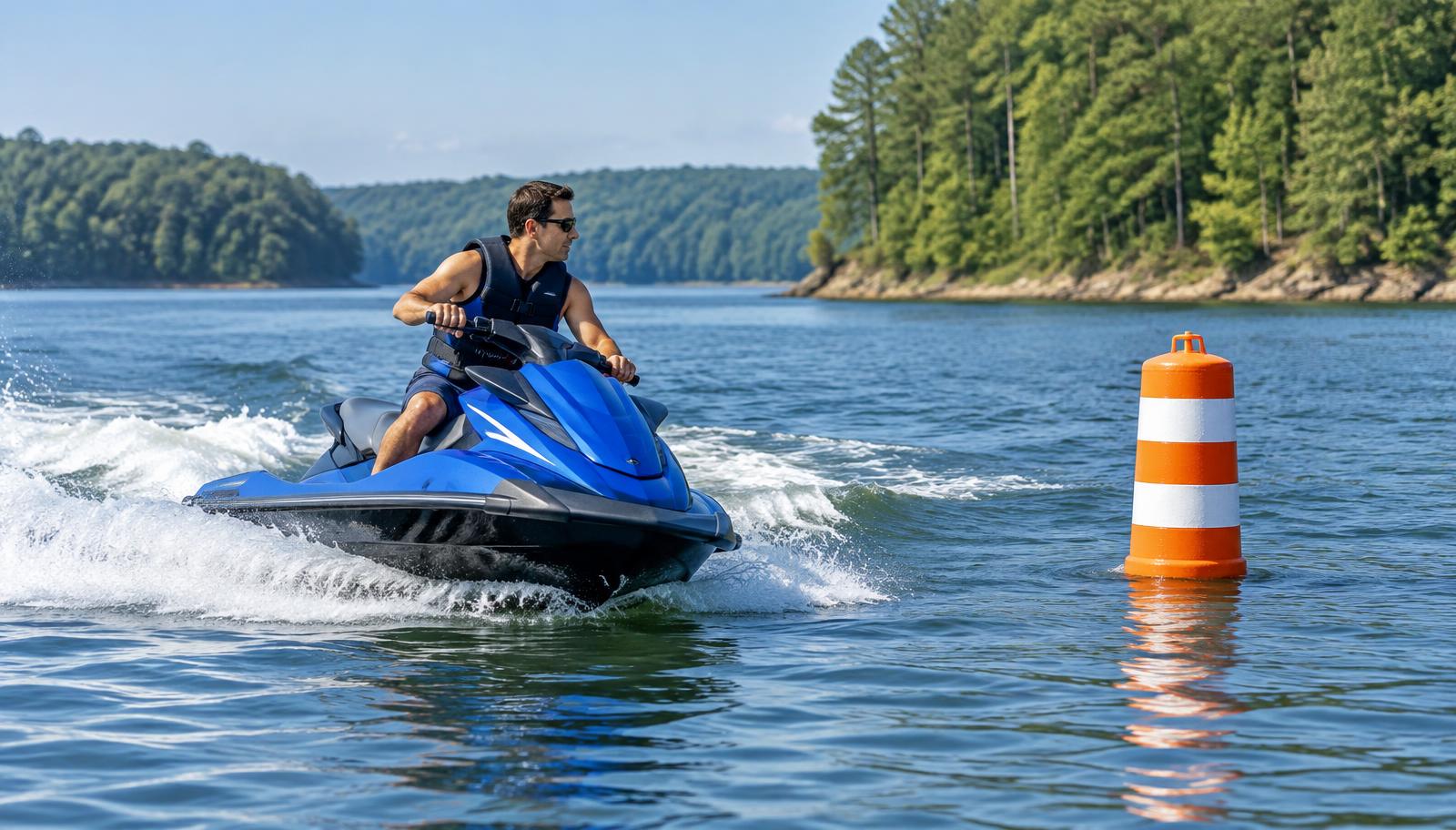
How old do you have to be to operate a jet ski in North Carolina?
North Carolina sets 14 as the minimum age to operate a personal watercraft. A person who is 14 or 15 may operate only after completing an approved boating-safety education course and must carry the certificate or card while operating. Younger children may ride as passengers when the craft's capacity and all safety requirements are met, but they cannot operate it.
North Carolina also requires anyone born on or after January 1, 1988 to complete an approved boating-safety course before operating a vessel powered by 10 horsepower or more. Our dedicated NC boater safety course guide explains the certificate process, while the boating-license guide explains who needs proof.
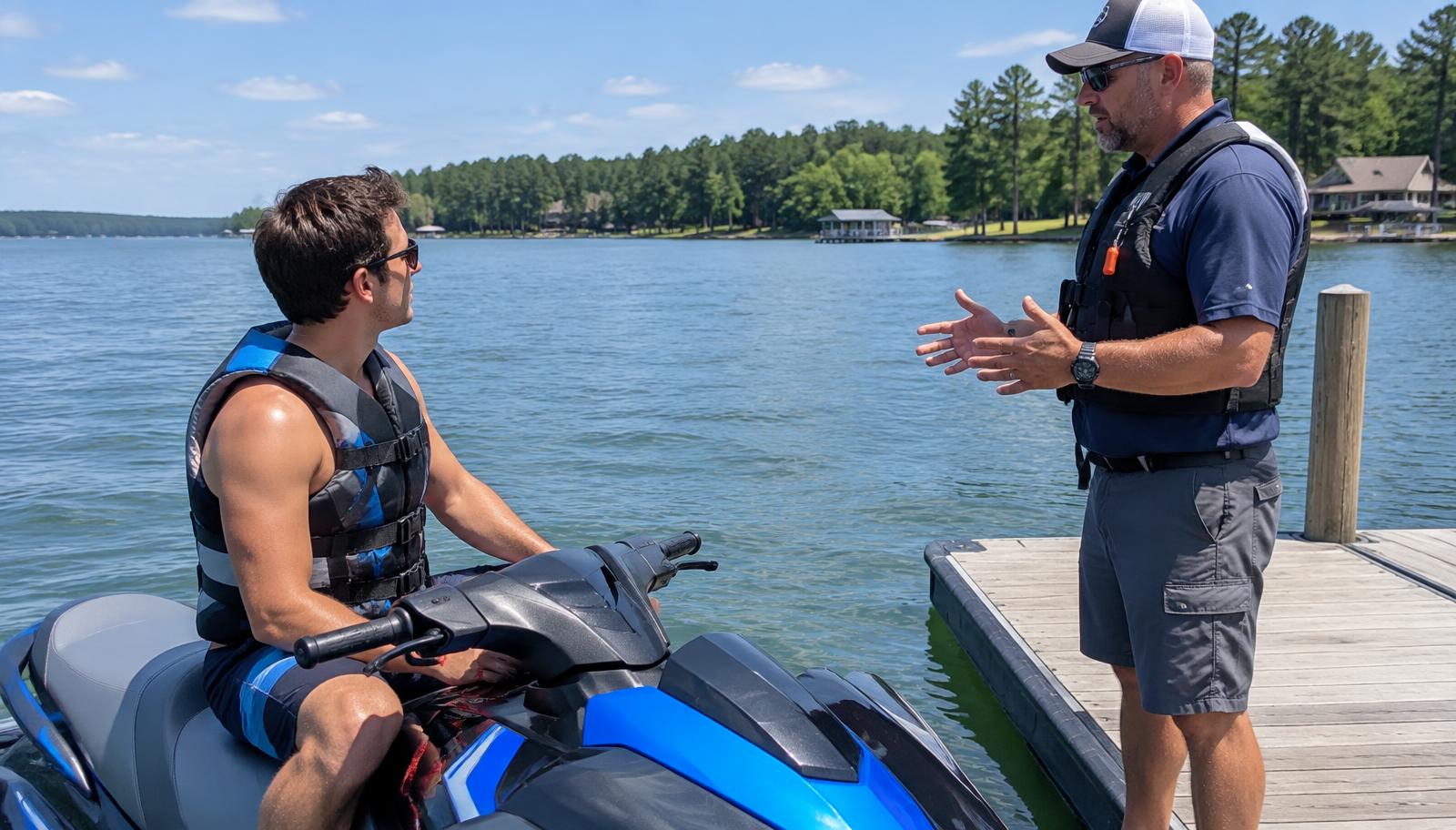
Do you have to wear a life jacket on a jet ski?
Yes. Each person riding or being towed by a personal watercraft in North Carolina must wear a properly fitted, approved personal flotation device suitable for the activity. A life jacket stored under a seat does not satisfy the purpose of the rule; it needs to be worn and secured.
Fit matters. A jacket should be appropriate for the wearer's size and should not ride up over the face when lifted at the shoulders. Replace damaged or waterlogged equipment, fasten every required buckle or zipper and keep the engine-shutoff lanyard attached to the operator when the machine uses one.
What does a no-wake zone mean?
A no-wake zone requires the slowest speed needed to maintain steering and forward progress without creating a damaging wake. These zones commonly protect ramps, docks, marinas, swimmers, shorelines and congested areas. They are not suggestions, and the correct speed may be slower than a rider initially expects.
Do not rely on a generic list of no-wake locations. Watch continuously for regulatory buoys and signs because the marked boundaries are what matter on your route. Reduce speed early, leave space around anglers and paddlers, and never use a buoy or shoreline as a slalom marker.
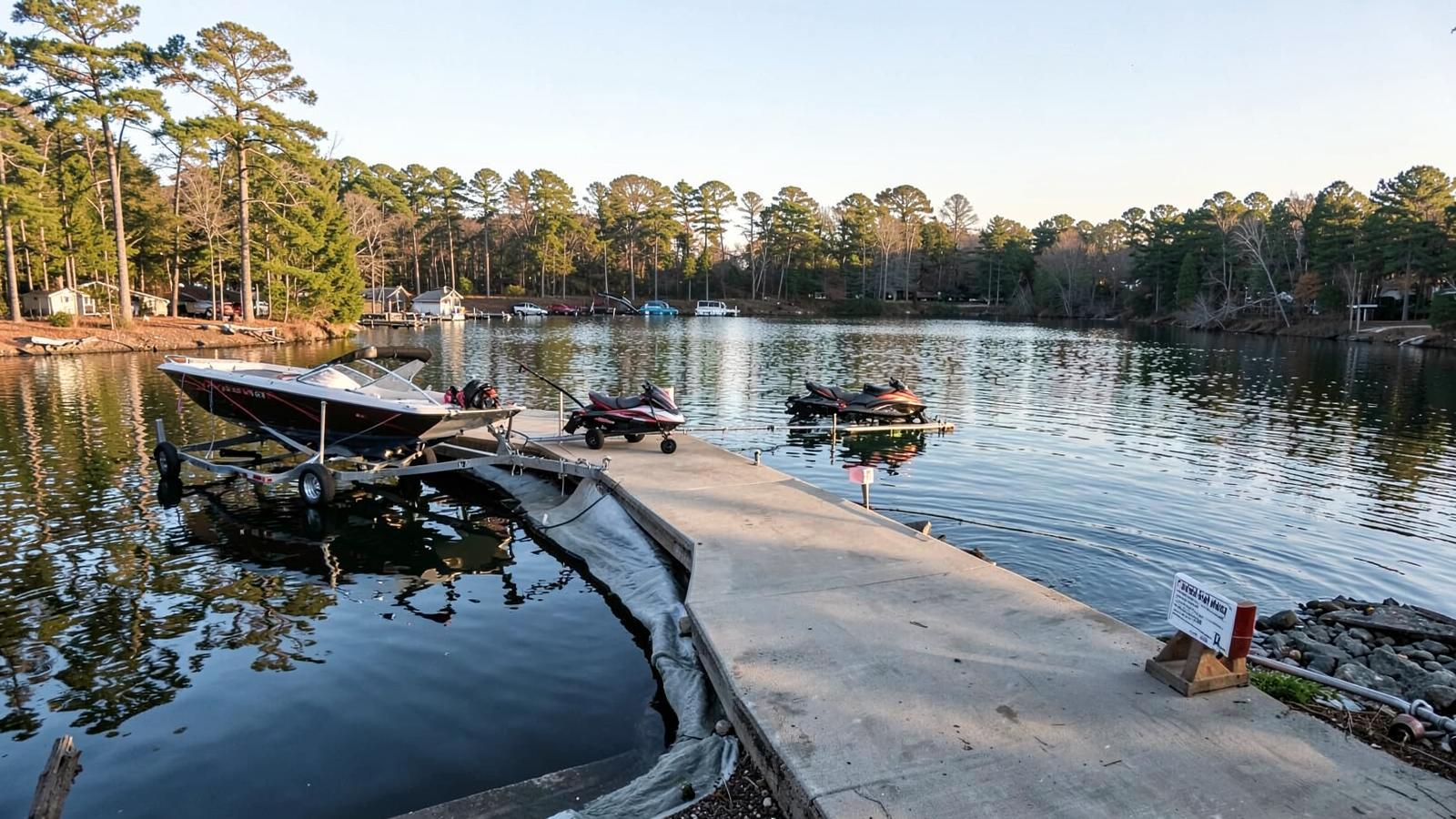
What hours can you ride a jet ski in North Carolina?
North Carolina law limits personal-watercraft operation to the period from sunrise to sunset. A clock time printed in a general article would be misleading because sunrise and sunset change through the season. Park gates, recreation areas or rental operations may also have narrower schedules.
Check the day's sunrise and the official access-area schedule before departing. Plan enough time to return without rushing, especially when afternoon weather is developing. If lightning, high wind or unsafe water appears, getting off the lake safely takes priority over using every booked minute.
Who enforces boating rules on the lakes?
State wildlife officers enforce boating laws, and other authorized agencies may patrol or manage particular waters and recreation areas. Their directions, posted closures and temporary safety zones take priority over trip plans. Carry identification and required education proof, and cooperate with safety checks.
A rental orientation helps you understand the machine, but it does not replace your responsibility to know and follow the law. Review our safety page before riding and use current official sources for legal questions. This guide is practical planning information, not legal advice.
Frequently asked questions
Last updated . Ready to ride? Jordan Lake or Falls Lake.